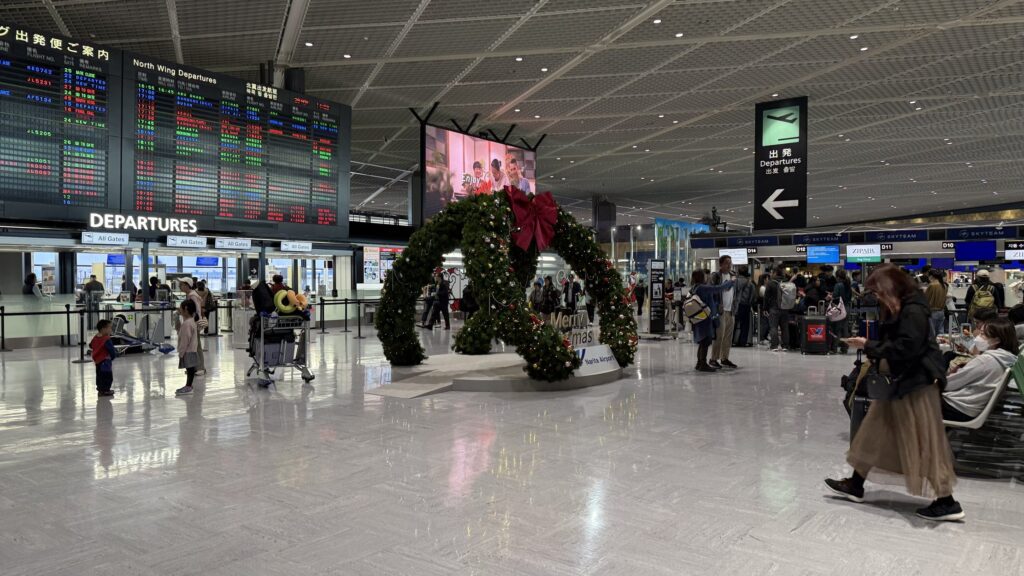
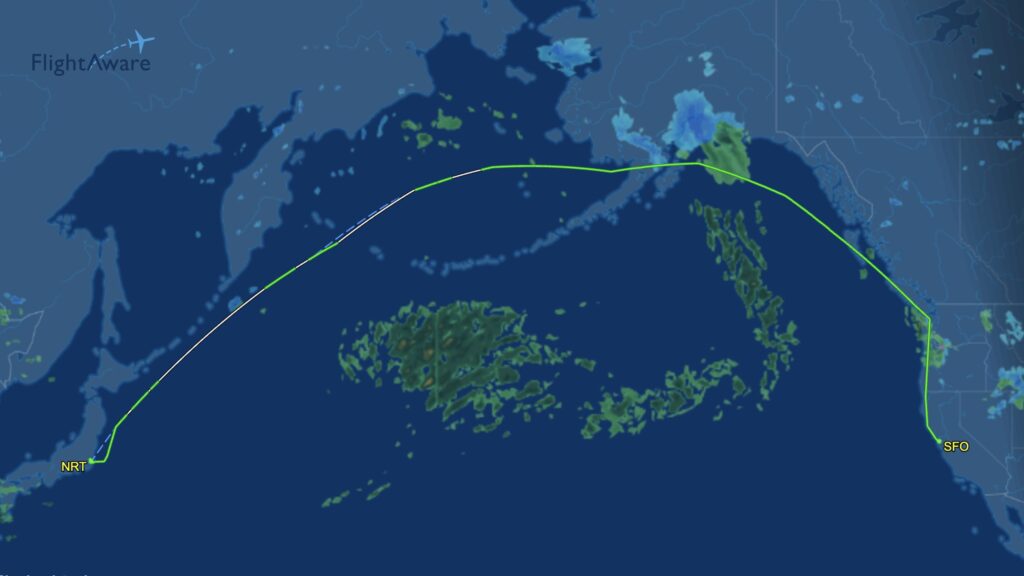
The taxi let me off at Terminal 3. The place was practically empty at this hour. Serene, in a strange way. It felt like the universe was still cradling me after the transformational month I’d just spent in Japan – like it wanted this journey to end on a whisper, instead of a bang.
The All Nippon Airways counter stood almost directly ahead. A beautiful young attendant greeted me with a bright, welcoming smile. Already imagining myself in seat 01A – Asahi in hand, slippers on, stretched out in “The Room” and watching the moonlight paint the sky over the Pacific – I handed over my passport.
My mind wandered forward further, home, to Cave Creek Arizona. I could almost smell the dust in the air. With some quick mental math I figured I could catch the last strains of whatever band would be playing down at Harold’s in about 15, maybe 16 hours. I felt good. I felt ready. In that moment, I felt I was going home mostly put back together. Not quite whole, but close enough. A far cry from the version of myself who landed here a month ago.
But then came the hiccup.
The smile on the attendant’s face faltered just slightly as she told me Continue readingmy flight had been cancelled.
The flight package I’d booked nearly a year before included a 3-day jaunt up to Sapporo. Content in Kyoto, and with the day trips I’d been taking, I opted to skip it. Didn’t give it much thought.
What I didn’t know was that under ANA’s policy, my skipping that leg without notice was considered a no-show, which triggered a cancellation of the rest of my itinerary – including my flight home!
And just like that, the end of my journey turned into a fork in the road.
Stepping slowly away from the counter feeling like I’d just awoke from a beautiful dream only to find the alarm clock blinking 12:00, I took a breath, counted to three, and let my inner monologue roll:
Alright, keep it together. Don’t panic. This is just another turn in the story. You’re not on a schedule. You’re not in crisis. Not anymore. You’re okay. You’re strong. You’re good. So… what now?
Instinctively I checked my bank account to find that not only had I gone grossly over budget, but the yen I had left was perilously close to gone.
To be honest, the frame of mind I was in when I booked the trip had this adventure pegged as a last hoorah. There wasn’t going to be much of an after after this to be concerned with. But that’s another story for another time.
The path this pilgrimage took me on, fortunately, had changed that directive dramatically.
So, there I stood, scanning the polished terminal for answers beneath signs in kanji and the scent of warm dorayaki drifting by from a nearby stall. No return flight. No backup plan. And, strangely, no panic. What I was feeling leaned more towards curiousity.
This wasn’t going to become a setback, I thought. No. I’d make it a plot twist instead.
Knowing I’d have to sharpen my pencil around the paper thin budget I was now working with, I found a corner to retreat to and started tapping out a search for cheap hotels. Capsules. I found one nearly across the street from the Hotel Oriental Express, where I’d just stayed the last several nights. I liked that stretch of town – the rhythm of it, the way the vending machines hummed at night like distant cicadas. And for thirty U.S. bucks, it was a no-brainer. I booked two nights, just in case.
I made my way over, checked in, crawled up to my pod, and started to mentally move puzzle pieces around.
A late afternoon hunger finally pulled me away from the Rubik’s cube of trying to figure out a way home. Whatever answers were hiding in it could wait another day. I packed up, stowed my things, dropped down from the capsule like a paratrooper, and headed over to the Oriental Express.
Tokyo was already beginning its nightly transformation. Neon signs flickered awake one by one. Salarymen loosened their ties as they drifted toward bars and train platforms. Smoke from little alley kitchens rolled into the street carrying the smell of grilled yakitori and oil and charcoal. The city felt like it was exhaling.
When I stepped into the lobby, the clerk I’d befriended was behind the desk again. Soft-spoken, practical, hair pinned up the same way every evening. She looked faintly amused to see me back so quickly, as though she’d already guessed Tokyo wasn’t finished with me yet.
I gave her the abbreviated version of the itinerary misstep. She laughed politely while I stood there grinning like a man who’d accidentally stumbled into a block of extra time.
And truthfully, that’s exactly what it started to feel like.
With a bow I headed back out into the Tokyo dusk in search of something familiar, cheap, and distinctly Japanese. If the universe was insisting I stay another night or two, the least I could do was enjoy it properly.
A short walk from the Oriental Express, quicker still if you cut through the alley, was a little tavern I’d taken a real shine to. One of those blink-and-you-miss-it places that seemed stitched directly into the neighborhood itself. Inside, a bar hugged the left wall with maybe eight stools worn smooth by decades of elbows and whiskey glasses. Across from it sat four tiny tables in a perfectly straight line, their lacquered wood carrying the accumulated scars of soy sauce, cigarettes, laughter, and spilled secrets.
At the far end of the narrow room, mounted high enough to require a full spinal adjustment to see properly, hung a flickering television. Baseball. Always baseball.
The bartender was also the owner – a Tokyo lifer with a deep devotion to the Yomiuri Giants and the conversational stamina of a late-night philosopher. Luckily, his English was far better than my Japanese. He poured whiskey with the seriousness of a church sacrament. If there wasn’t a live game on, he’d put on an old one instead. Grainy footage from years earlier looping endlessly through cigarette smoke like memories refusing to die.
It was the kind of place you don’t really discover as much as it discovers you. Which is maybe why it felt a little like home.
Right next door was a tiny restaurant where I’d eaten twice already in as many days. The waitress had the demeanor of someone who’d retired her smile sometime around 1987 and never felt compelled to replace it. Both previous visits had turned into quiet little personal challenges where I tried unsuccessfully to earn even the faintest crack in her armor.
Nothing.
But this time, when I stepped through the door after what I thought had been my farewell to Japan the night before, something shifted. Maybe it was the bow. Maybe it was the visible relief of a man no longer rushing toward an airport. Maybe she simply recognized me. Whatever it was, there was suddenly the faintest trace of warmth there.
Not much. Just enough.
She pointed silently toward an empty table.
When I sat down, I caught her reflection in the window glass behind me.
She was smiling.
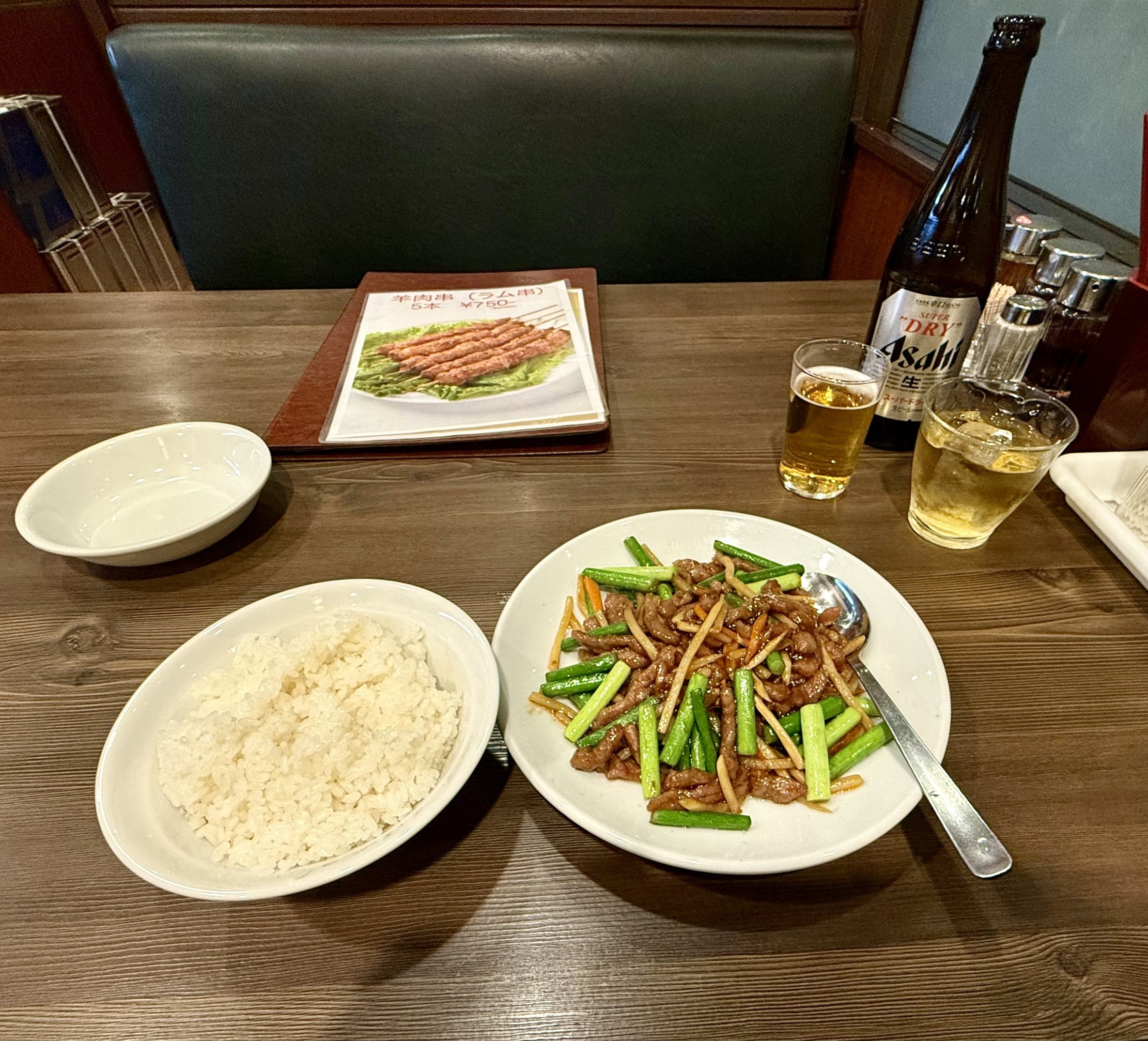
I ordered the yakiniku donburi again. Asahi. Whiskey. By then it had become less of a meal and more of a ritual.
A few minutes later the door opened and two familiar faces walked in.
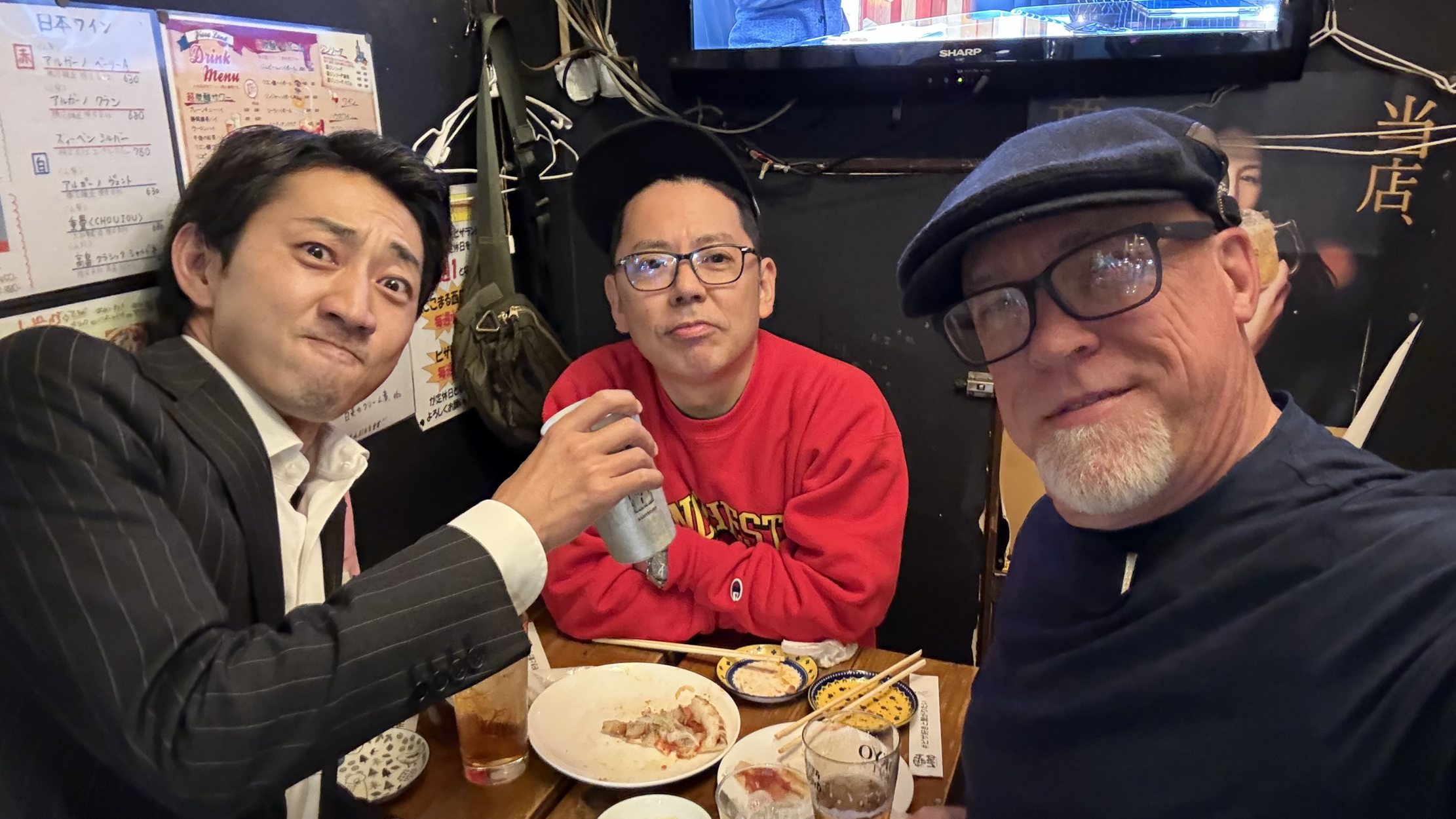
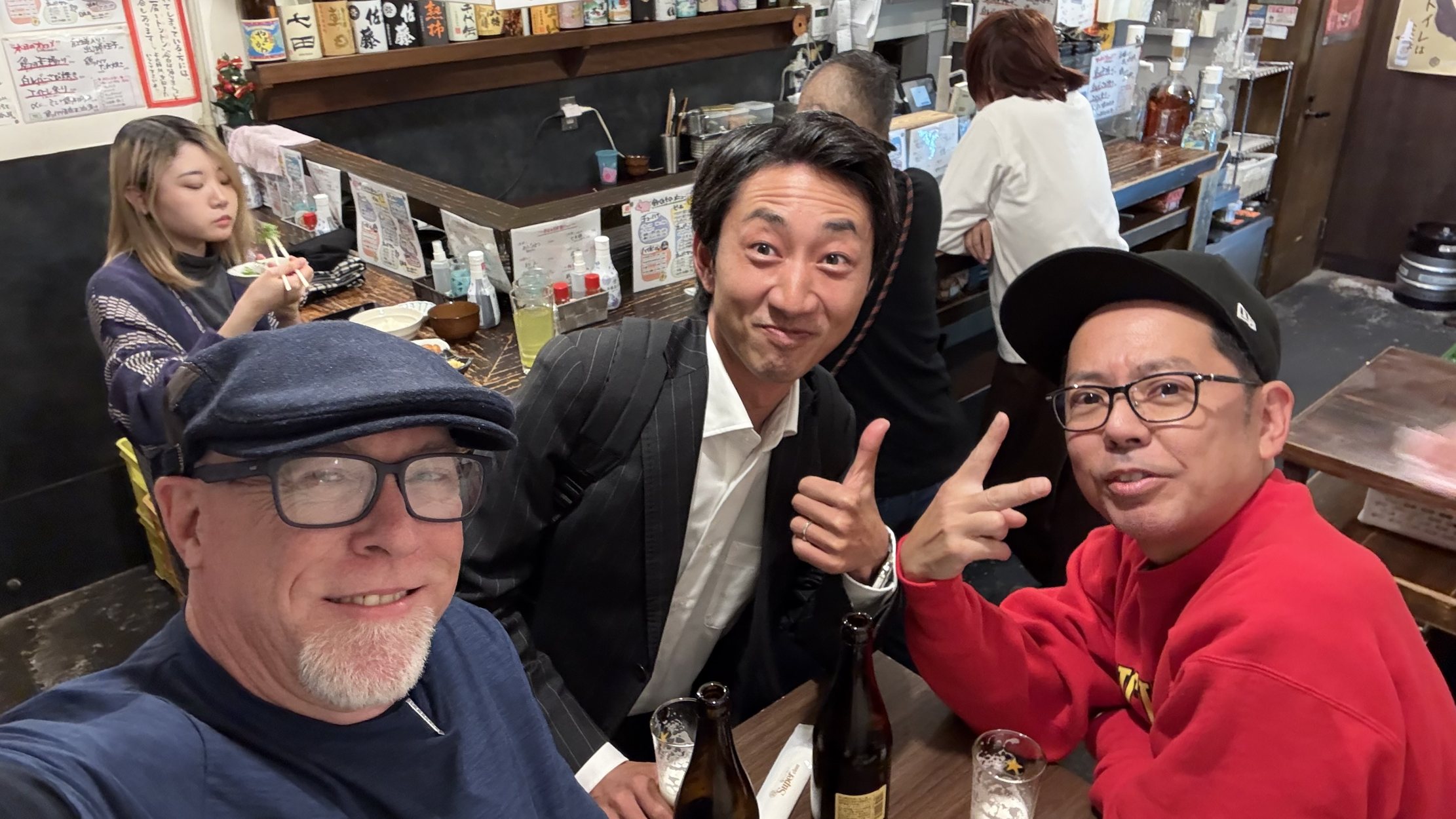
I recognized them immediately from the baseball tavern the night before. We hadn’t spent more than a few hours together, but sometimes you meet people abroad and skip directly past introductions into something that feels strangely longstanding. A nod becomes shorthand. A shared drink becomes history.
One of them was a pharmacist, funny, kind, thoughtful and measured in the way he spoke. The other wore his hat with the brim standing up straight and carried himself with the effortless charisma of someone accustomed to attention without needing it. I later learned his name – RYO Tanaka – a moderately famous pop star in Japan, though at the time I had absolutely no idea. To me they were simply two exceptionally kind strangers who’d adopted me for a few hours.
They’d apparently expected me to be gone already.
When they realized my flight hiccup had bought me another night in Tokyo, they insisted on taking me through the yokocho. The alleyways. The real places hidden behind the visible city.
I didn’t require much convincing.
We left the restaurant and slipped into the backstreets like old friends reconnecting after years apart instead of three men whose lives had only briefly overlapped. Lantern light spilled across wet pavement. Yakitori smoke drifted through narrow corridors barely wide enough for two people to pass shoulder to shoulder. Everywhere there was the low hum of intersecting conversations punctuated by sudden bursts of laughter and the hiss of meat cooking over open flame.
These weren’t polished restaurants or curated tourist experiences. They felt more like tiny living rooms that happened to possess liquor licenses. Izakayas, where the stools wobbled, the walls were yellowed with smoke and every place carried the feeling that stories had been accumulating there for decades.
Everywhere we went, people recognized him. Fans and friends.
Heads turned as soon as we walked through the doors. In more than one tavern, girls reacted with the sort of startled excitement usually reserved for celebrity sightings or religious apparitions. But the strange thing was how little interest he seemed to have in any of it. If anything, he redirected the attention toward me, introducing me to people with the exaggerated mythology that only appears after several rounds of whiskey and impossible translations.
By that point in the night, all three of us were speaking a dialect composed equally of English, Japanese, gestures, alcohol, and mutual goodwill.
And not once did they let me pay for anything.
Drinks simply appeared in front of me. Skewers materialized. Someone always reached for the check before I could. Every attempt to contribute was gently waved away. At one point they informed me, somewhat ceremonially, that I was both their honored guest and their elder, which felt amusing considering one of them was maybe ten years younger than me at most.
We toasted constantly.
To music.
To America.
To Japan.
To missed flights.
To late trains.
To accidents that stopped feeling accidental.
By then the city had crossed fully into midnight.
Eventually we drifted back toward the neighborhood not far from my capsule hotel. Fans still whispered behind phones as we walked. Outside Bourbon Road beyond Kamata station, with the electric glow of vending machines and fluorescent storefronts, we said our goodbyes.
Ryo hugged me and told me I’d changed his perception of Americans.
The pharmacist bowed deeply, then squeezed my shoulder with the kind of warmth usually reserved for old friends.
Satisfied I could safely be handed back over to the Tokyo night, they disappeared into the haze.
I stood there for a moment, slightly tipsy but completely lucid, watching the city breathe around me.
The baseball tavern glowed back into focus just down the alley. The neon sign looked like it was trying to wink me back inside.
In Cave Creek it was customary to volley around the phrase “final-final” about this time of night. It usually ended up drifting slightly further into final-final-final.
Slowing my gait as I approached I thought, yeah, what the hell. I stepped through the door, nodded at the bartender, and settled onto my stool for one final-final.
Then I saw her.
Famica.
```
Walking Away
by William Snyder
Ban Kan Throm, Thailand
April 23, 2026
Beyond the checkpoint, I’d settled into a seat along the wall where floor-to-ceiling windows stretched past the coffee shop before I noticed … before the weight of actually being there settled on my chest. Sunrise dancing off the tarmac. A faint smell of duty-free perfume. Rolling suitcases clicking in time.
I had detached myself weeks ago, or months, and yet it took this quiet, solitary moment to realize I was already on the river and my makeshift raft was floating out past the fault line. No dock behind me, no tether, nothing but the current and the reflection of sky in murky water.
Somehow, without noticing, I was already adrift.
I was the least likely person to do this. Multi-generational paths run deep in the Midwest. Hunting in the crisp fall morning air. Creel and rod, wading along the river bend. Baseball was church. The town tavern, bourbon, cigars. The farm. Business meetings with foregone conclusions.
Small town. Salt-of-the-earth. Everyone knew our name. I loved it. I still do. It shaped me, defined me.
I carried my father’s name, my great-grandfather’s, proudly. I mimicked the cadence, the posture, and the inherited weight of expectation. Naturally, I should have followed through. And yet I didn’t.
From as early as I can remember, I was watching a movie of myself that didn’t make sense.
I heard the ball hit the bat, smelled the grease in the diner, felt the grain of oak bar tops beneath my palms, but my mind wandered to shadows falling across a fencepost, to the blurry margins, to a temple bell I had never heard.
My heart wandered further still, to lands where rubber trees stood in formation and red dust tasted familiar. I felt it in my bones. I knew I belonged somewhere else – not out of anger or rebellion, but in quiet recognition that the world I loved, perfect as it was, was not my own.
Guilt coiled in me for feeling so unlike the men who came before, and yet I could not anchor myself, in either life. I was displaced, hovering between expectation and yearning.
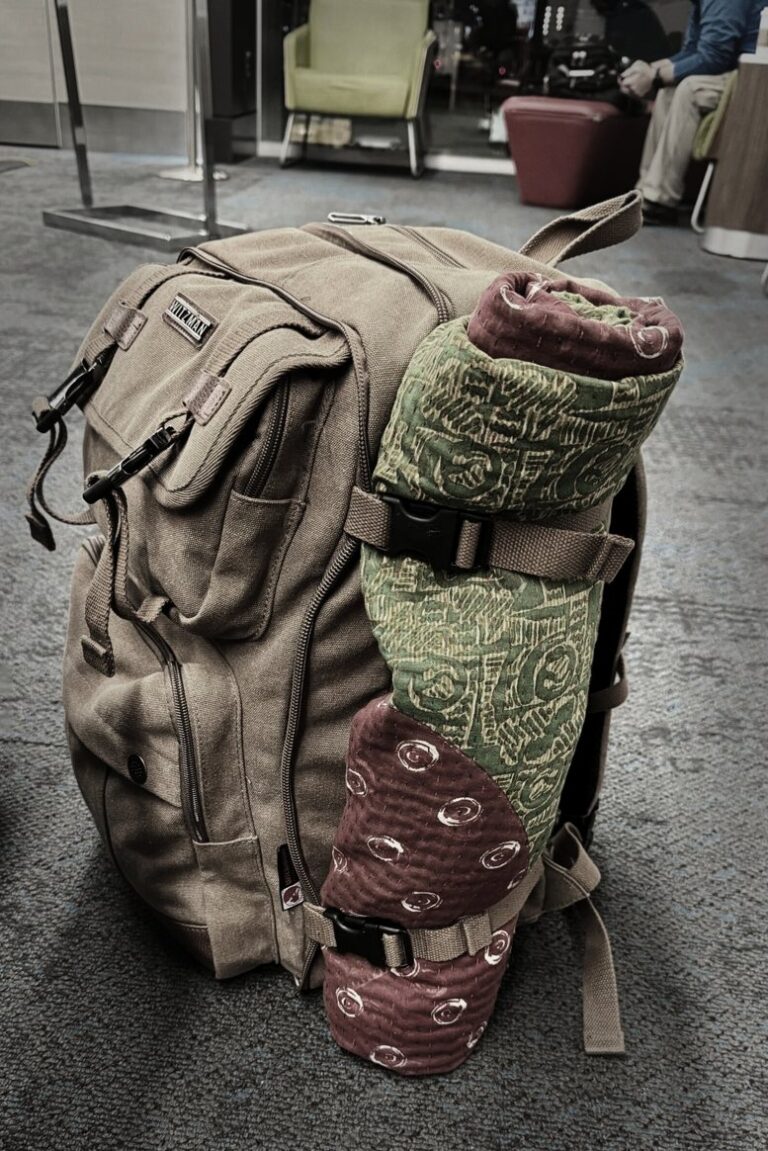
And then the movie revealed a plot twist. Everything I called my own – possessions, all of it – suddenly belonged to someone else. Everything compressed, reshuffled, and reduced down to a single backpack. Everything I needed in one strap.
I left.
The tavern, the cabin, the baseball, the office, the perceived security, the well-worn blueprint – I set them down. All of it stayed behind.
The reckless visions that had lived quietly in my head for decades: photographers on assignment in faraway lands, vests with pockets full of notebooks, film, and uncertainty, the smell of distance and dust, stories waiting to be told – I carried these things forward.
I was determined to touch that world. Smell it. Feel it in my chest. I stepped off the dock, untied the rope, and trusted the river to take me.
Most men dream of packing a backpack and walking away.
Few do.
I did.
And the cliché I am still untangling – the thing many who dream of it never fully see – is that the journey is everything. The friction. The awkward steps. The small victories. The moments when nothing seems to matter and yet everything does.
The landing, the arrival, is almost beside the point. The thrill, the terror, the subtle joy that you can’t quite name – it lives in the current, not on the shore.
The cornfields behind the farmhouse, the smell of opening day, the echo of heritage and tradition inverted like a funhouse mirror to watergrass swaying in a paddy field, the reverberation of temple gongs, the warmth of red dirt beneath bare feet.
I don’t know if it makes me reckless, selfish, or authentic. I only know this: when your dogged pursuit is the undefined edges and the out-of-focus in-between, it is the work, the steps that make up your days, the imperceptible step in front of the other … this is where you find a joy no milestone could ever hold.
The prize was never at the end. It’s always been here – in the river, in the rope trailing in the current behind me, in the temple incense, in the quiet audacity of simply walking away.
In Isaan, especially near the Thai–Cambodian border, the spiritual world is not treated as distant or symbolic. It sits close. It moves through people, places, and memory. Consulting a medium here is no stranger than visiting a monk, asking advice from an elder, or sitting with someone who has simply lived long enough to see patterns repeat.
These mediums are not framed as fortune tellers in the Western sense. They are intermediaries. Translators. Individuals believed to receive influence or guidance from forces that exist alongside the visible world — ancestral spirits, local guardians, historical figures, child spirits, and energies bound to specific land and lineage.
Their work is not prediction-heavy. It leans instead toward interpretation — making sense of imbalance, illness, conflict, grief, or a lingering sense that something is unresolved. In villages like these, the unseen is not dramatic or theatrical. It is practical.
One such medium lives near Kantharalak, in Si Sa Ket province. Her name is Thua Lek, a simple nickname meaning “small lady.” She has served this region for decades, known quietly across villages not through spectacle, but through consistency.
People come to her when they are stuck — when something has gone missing, when sickness lingers without explanation, when family tensions refuse to loosen, or when grief does not know where to settle.
Thua Lek is fifty years old and barely three feet tall, a physical presence that immediately disarms expectation. Yet it is not her stature that defines her role. It is the spirit she channels — a child spirit — whose voice shapes the sessions.
The guidance that comes through her is often simple. Direct. Occasionally blunt. It carries the weight of long familiarity rather than mysticism — truth delivered without ornament, the way children sometimes speak when they have nothing to gain by softening the edges.
Here, along old borders and layered histories, belief is not an abstract exercise. The unseen is not imagined.
It is part of the landscape.
And somewhere between the world people walk through each day and the one they carry quietly inside them, Thua Lek sits — offering reassurance that nothing is ever entirely unheard.
Sak Yant: Magical Tattoos and the Weight of Intention
by William Snyder Kanthrom, Thailand
Originating in the ancient Khmer Empire – now called Cambodia – Sak Yant is a spiritual practice of tattooing that dates back well over a thousand years. Ninth century. Before borders. Before they mattered.
Sak means to tap, or to inscribe. Yant comes from the Sanskrit yantra – a sacred design, a mystical diagram, a language meant more for the unseen. The literal translation: Magical Tattoos.
Sak Yant is performed today as it was then, using either a mai sak – a bamboo stick, or a khem sak – a metal rod. Both are ancient tools, differentiated not so much by lineage as by use.
Sak Yant is not done in tattoo shops.
It can’t be bought. It’s received.
The ceremony is facilitated by an Ajarn, a Sak Yant Master who dedicates their life to spiritual study – learning from elder masters, carrying lineages forward, and shouldering knowledge that isn’t written down anywhere.
About forty minutes outside our village lives a Phram named Nop, a highly respected Ajarn. Remote doesn’t cover the location. You drive until the road is no longer a road, and then you keep going – until you arrive at a place quiet enough to hear the breath of your own intention.
Nop isn’t a novelty. He’s the real thing. Walking with monks. Sitting in the mountains. Generational. Disciplined. Widely sought after.
He’s summoned to places like Hong Kong, Taiwan, and Malaysia to perform Sak Yant ceremonies. And sometimes – if you show up and the energy is wrong, if the intention is off, even by a whisper – the answer is a quiet no.
No theatrics. No explanations. Just… not now.
To receive Sak Yant from a master like Nop isn’t a transaction. It’s a moment of alignment. The power of the ceremony is transferred through guttural breath, mantra, and sacred lineage.
Once received, you’re said to be cleared of lingering misfortune. Protected from black magic. Shielded from intention meant to harm.
And energized – with clarity, momentum, and good fortune – for the path you’re already walking.
But only if you arrive honest. Only if you arrive ready.
Because this ceremony isn’t about the tattoo.
It never was.
If you come looking for something specific, a tattoo shop might be a better choice.
This is about what you’re willing to carry – and what you’re finally ready to let go of.
And in the end, it becomes a quiet test – of whether you’re willing to trust the Master with the message you’ll carry with you for the rest of your life.
There’s a moment in my book – Scene Nine – where a sacred tattoo ceremony is revealed. Like much of the story, it actually happened. Maybe not exactly as written. Maybe not in that order.
There’s a particular feeling that’s hard to describe unless you’ve lived inside it: the sense that you’re existing on the wrong timeline.
Not just unhappy. Not just bored.
Off.
Wrong career. Wrong city. Wrong relationship. Wrong version of yourself moving through days that don’t quite belong to you. You can function there. You can even succeed there. But everything feels like swimming upstream with a calm face while your body quietly exhausts itself.
And the strange part is this: most people don’t arrive on the wrong path accidentally.
It usually takes years of effort to get there.
Yet, we stay because we convince ourselves it’s easier. Change feels catastrophic. Staying feels survivable. So we tolerate monotony. We tolerate dull despair. Sometimes we tolerate outright self-destruction, because at least it’s familiar.
I stayed for a long time.
Looking back now, I can’t recall a single major decision I made earlier in life—career, geography, relationships—that was truly mine. Not because I was being manipulated, exactly. It was subtler than that. I didn’t want to create disruption in someone else’s life. I didn’t want to cause a ripple.
I was willing to absorb the consequences myself.
I’d already developed a kind of numbness to adversity. I believed I could muscle through whatever fallout came my way. What I couldn’t tolerate was the idea of causing pain or instability for someone else. So I chose paths that kept other people comfortable and quietly fractured my own life instead.
What I didn’t understand at the time was that this doesn’t eliminate damage. It redistributes it.
The ripple always comes. It just spreads wider.
Family. Friends. Business partners. People I loved. All affected by a version of me who was living downstream from his own decisions, trying to keep the water calm for everyone else while creating years of compounded damage in the process.
By the time I saw it clearly, the sum total of my life felt maddening: well-intentioned decisions I never wanted to make, followed by years spent living inside their consequences.
Then came Thailand.
Ending up here was not part of a plan. I didn’t seek it out. I didn’t romanticize it. I landed here through a chain of events that still defy clean explanation, and what followed made it unmistakably clear that I was meant to stay.
Not in a metaphorical sense. In a literal one.
Since arriving, circumstances have unfolded with a precision that feel cosmically engineered. Doors opened that shouldn’t have. Exits closed that normally would have been available. The message was not subtle. It was insistent. Almost confrontational.
It was time to stop living as a diluted version of myself.
Not a “better” self. A truer one.
We like to believe we’re mostly authentic, most of the time. Some people are. Many aren’t, especially in the Western world, where identity is often negotiated rather than inhabited. I thought I was living honestly. I wasn’t even close.
That realization didn’t arrive gently.
Choosing to step fully into the life that fits you is not inspirational. It’s destabilizing. You disappoint people. You confuse people. You risk isolation. You risk being misunderstood by those who love you most. They may feel abandoned. In some ways, they are.
There’s no clean version of that.
For me, the risk was enormous. I was already standing on unstable ground—emotionally, spiritually, financially. I watched peers move into retirement paths laid decades earlier while I stepped onto something with no precedent, no credentials, no reputation to fall back on.
In a country I had never been to. Ten thousand miles from everything familiar.
On its face it was absurd.
And it wasn’t optional.
What Thailand revealed—slowly, then all at once—is that my authentic life has two undeniable centers.
The first is here. Rural Thailand. Deep Isaan. Not the idea of it, the lived reality. The rhythm, the Buddhism, the community, the simplicity, the cultural joy that doesn’t announce itself. I didn’t “adapt” to this place. I recognized it. The drift inside my bones stopped immediately. This is where I was always headed, apparently.
The second is the work.
This project. The writing. The books. The Journals. The films. The radio show.
The thing that hid behind the name Oscar Slamp. It is the only work I have ever done that made me feel whole. It doesn’t require justification or performance. It healed something that had been broken for a very long time. It created a fire in my belly that I can’t remember the last time I felt.
There is no financial fairy tale attached to it. Not yet. Probably never.
I’ve sold out to it anyway.
Some things are larger than revenue. Some commitments don’t ask for certainty, they ask for allegiance.
This is the hill where I will live or die.
Bun Kathin Festival – A Glimpse Inside The Village
The Bun Kathin festival is a major annual merit-making event celebrated by Theravada Buddhists across Thailand, Laos, Cambodia, and Myanmar.
It marks the end of the rainy season retreat (Vassa), bringing entire villages together in spiritual offering and community joy.
In this short film, we make the short ride from home to the village temple to witness just a few candid moments from the celebration. From a raw, on-the-ground perspective, we:
Visit neighbors and friends
Explore the temple grounds
Share laughs (Thai humor) with local youth
Watch coconut rice being cooked in bamboo ash beds
Observe a temple-building ceremony where the entire village is connected by a single string to the monks and the piece of the new structure being added.
Wrap the day with food, drinks, and laughter.
No script, no narration – just moments as they happened.