by William Snyder
Published June 19, 2026 • 10 min read
Non Thong Lang, Thailand
Seeing an elephant saunter past the kitchen window while enjoying a morning coffee should be a rare, even startling, experience.
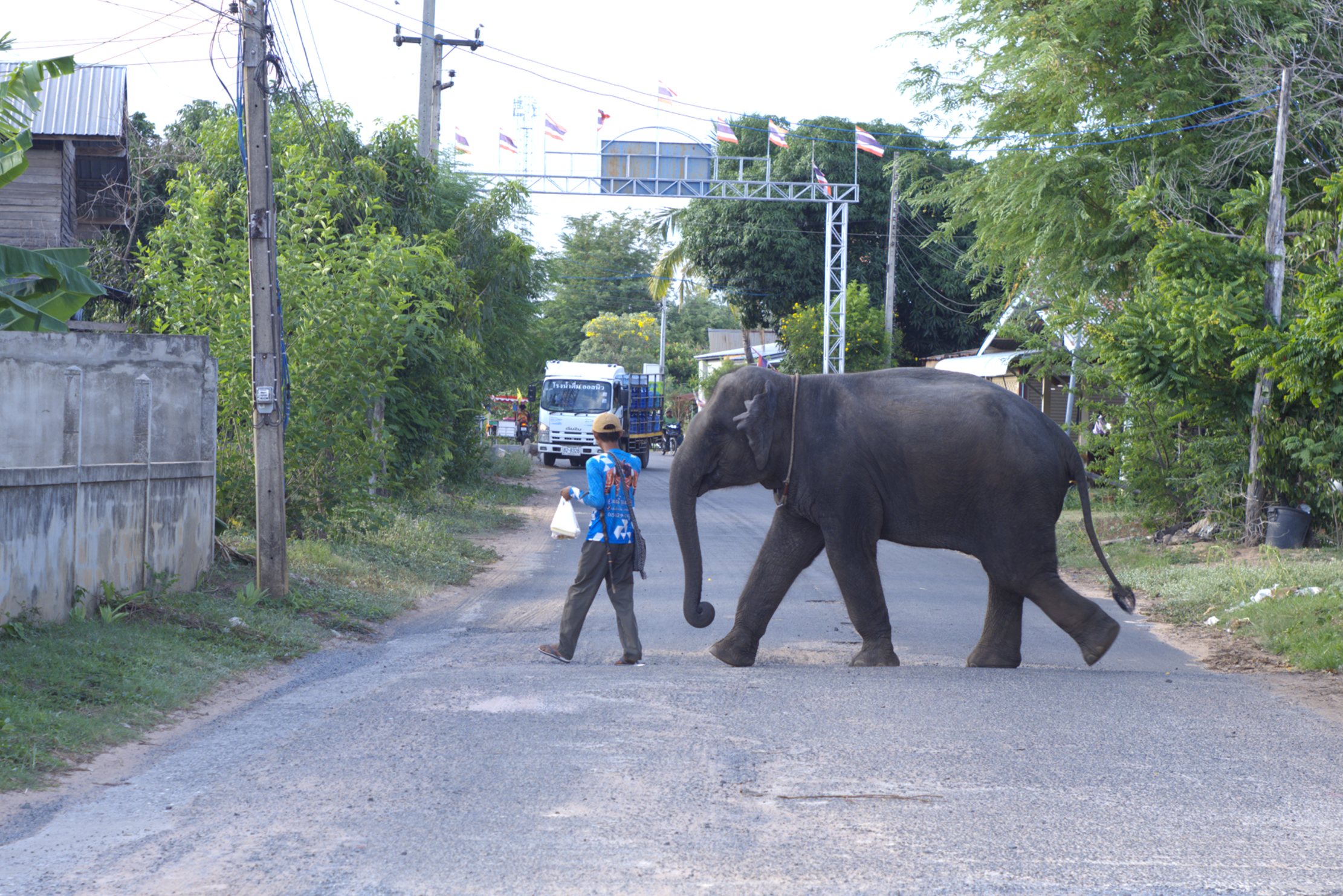
And while it isn't exactly an everyday occurrence here in our village, it isn't particularly unusual either.
Every few months, word spreads quickly along the dusty roads that an elephant is coming through. Dogs begin barking before anyone sees it. Children abandon whatever game they are playing. Grandmothers step out onto porches. By the time the elephant reaches the center of the village, a small crowd has usually formed around it.
For visitors, it might seem extraordinary.
For rural Northeast Thailand, it is simply part of life.
About an hour northwest of our village, in the neighboring province of Surin, lies Ban Ta Klang, better known as Elephant Village. Home to roughly 300 captive elephants, it remains one of the most important centers of elephant culture in Thailand.
Thailand today is home to approximately 6,000 elephants, roughly half of which live in captivity. Nearly half of those captive elephants are connected in some way to the Surin Province and the generations of families who have raised, trained, and cared for them.
At the center of that relationship is the mahout.
Mahouts are the caretakers, trainers, companions, and often lifelong partners of elephants. The tradition stretches back centuries. Long before tourists arrived with cameras and smartphones, elephants and mahouts were woven into the fabric of Thai life.
Elephants have been domesticated since around the late thirteenth century. They played a historically significant role in the Sukhothai-Champa War (1313) serving as heavy calvary and later became indispensable laborers, hauling massive teak logs from remote forests, clearing land, constructing roads, and transporting goods through terrain inaccessible to machines. At the turn of the 19th century there were around 20,000 elephants in the transport trade around Chiang Mai alone.
The mahout tradition evolved alongside them from the beginning.
The knowledge of caring for elephants was passed from family to family spanning many centuries. Likewise, many captive elephant bloodlines...Keep reading
stretch back through the same timelines, villages, and communities.
From the very beginning, long before this land was known as Thailand, elephants were not merely animals.
They were coworkers, companions, valued assets, and symbols of status and power.
Then, in 1989, everything changed.
Thailand banned commercial logging, effectively ending one of the primary industries that employed working elephants. Almost overnight, thousands of elephants and the families responsible for them lost their livelihoods.
Maintaining an elephant is enormously expensive. An adult can consume hundreds of pounds of vegetation in a single day. Mahouts needed a new way to support both themselves and the animals under their care.
Tourism became the answer.
Over the following decades, elephant camps and tourist attractions spread throughout the country. Today, Thailand is considered the global center of elephant tourism, with hundreds of venues offering some form of elephant encounter.
The transition has never been without controversy.
In heavily touristed destinations such as Phuket and Pattaya, the relationship between elephants and tourism often feels transactional. Questions surrounding animal welfare, training methods, and commercialization continue to generate debate.
Yet the picture becomes more complicated in rural areas.
Here in Isaan, elephants are still viewed with an almost reverential respect. They occupy a unique place somewhere between livestock, cultural treasure, and family member.
Legally, captive elephants are classified as livestock, but they also receive special protections under Thai law. Government programs provide support for elephant-owning families through housing assistance, healthcare programs, and subsidies intended to ensure proper care.
Culturally, their importance runs even deeper.
The birth of The Buddha revolves around the elephant. For the past thousand years, elephants led royal ceremonies, religious traditions, and village celebrations.
They are regarded as sacred animals and are deeply woven into Thailand's national identity.
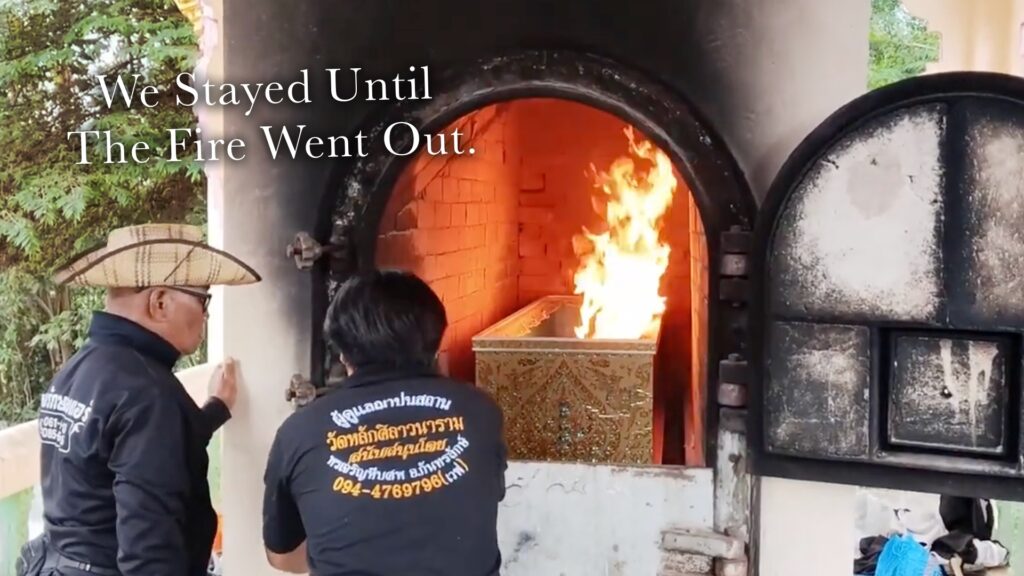
When an elephant dies, funeral ceremonies are often held that closely resemble those conducted for people. Monks attend. Families gather. Prayers are offered. Ascension ceremonies last for days.
That level of respect can be difficult for outsiders to reconcile with the realities of captivity and tourism.
The relationship contains both affection and economics.
Reverence and dependence.
Tradition and modern necessity.
Perhaps nowhere is that contradiction more visible than in the villages where elephants still walk the roads.
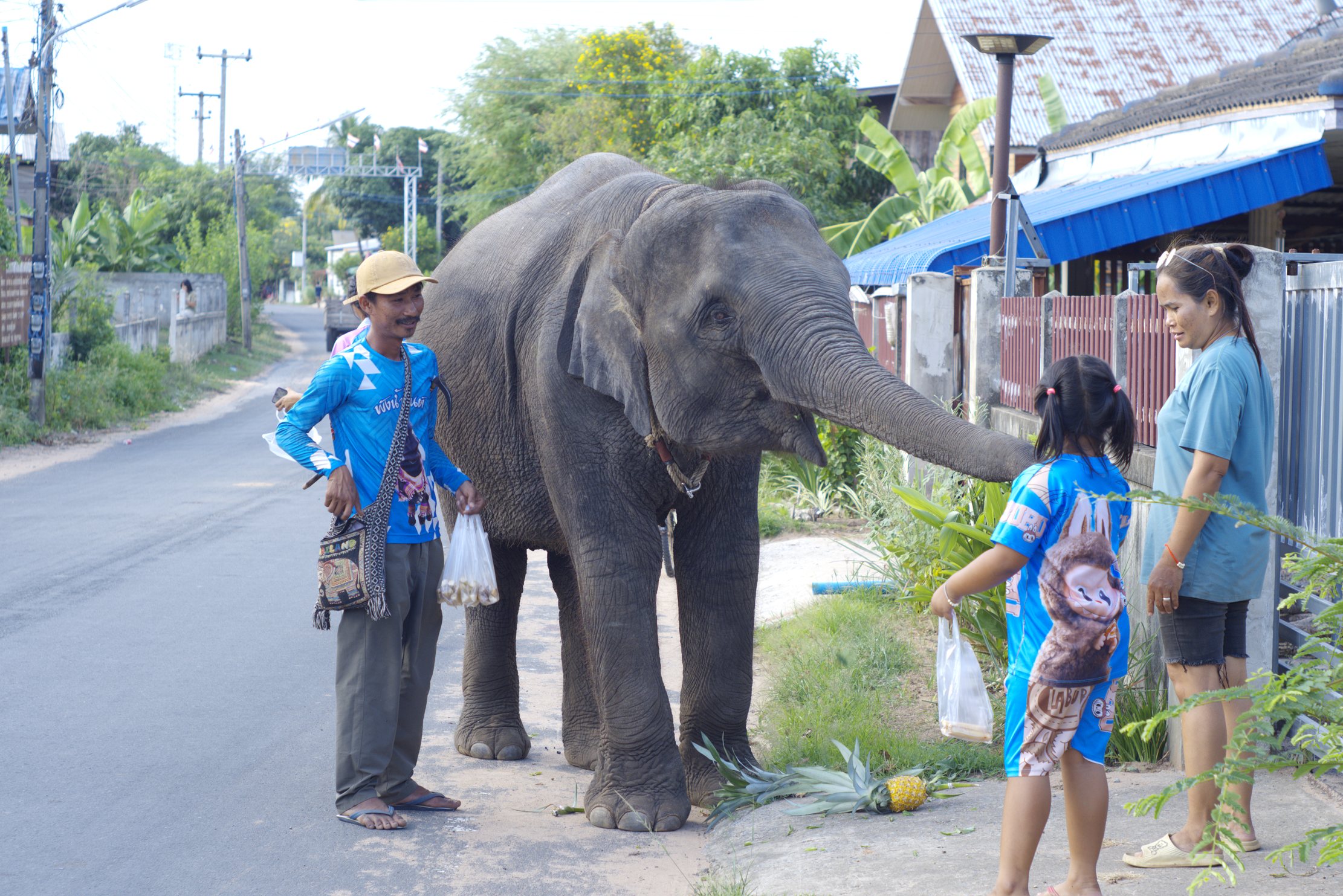
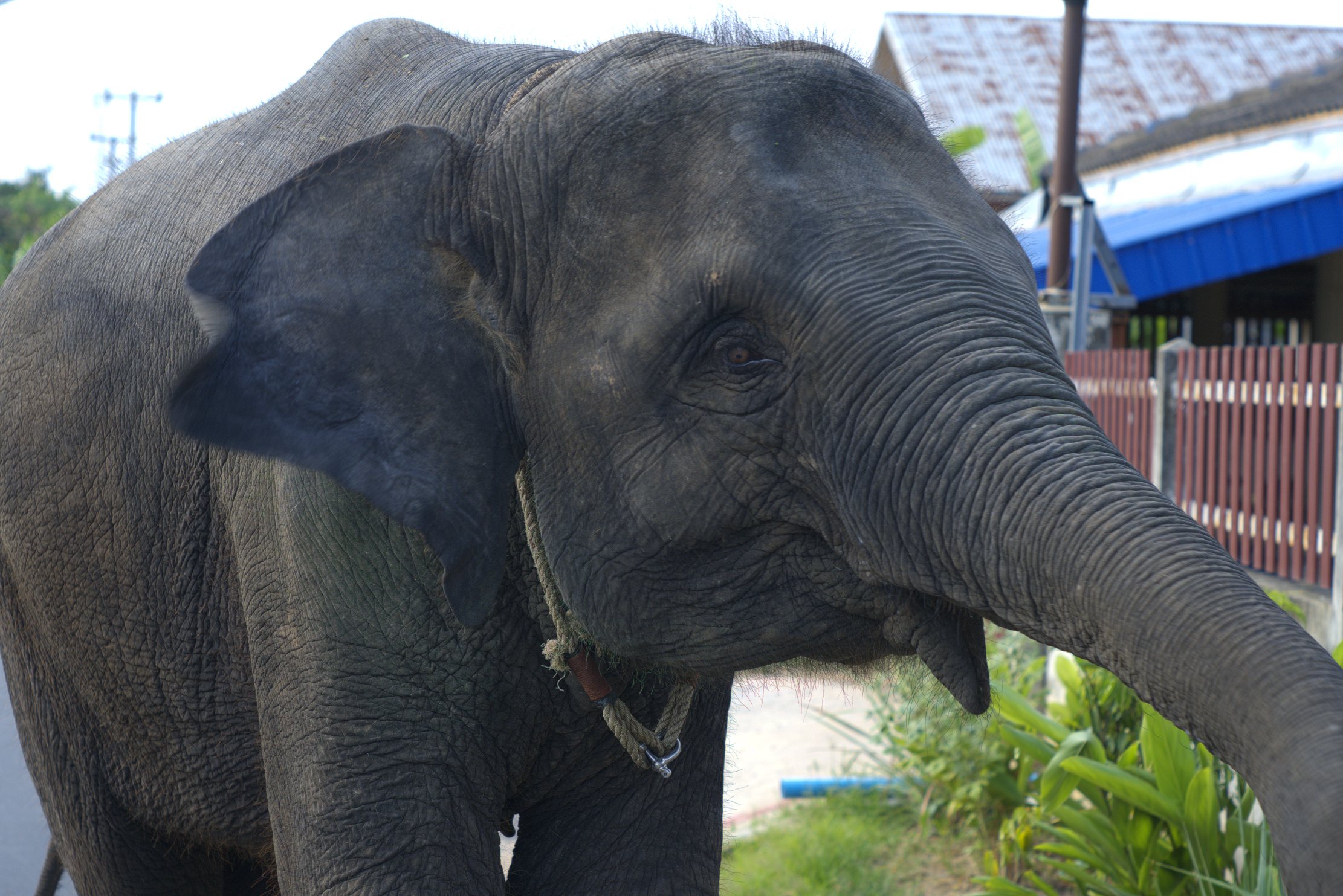
One recent morning, I found myself following a young elephant and its mahout down our street with a camera in hand.
My wife, Jit, trailed behind carrying armfuls of sugar cane leaves, mangoes, and pineapple gathered from the yard. The elephant accepted each offering with obvious enthusiasm.
What struck me most was the calm.
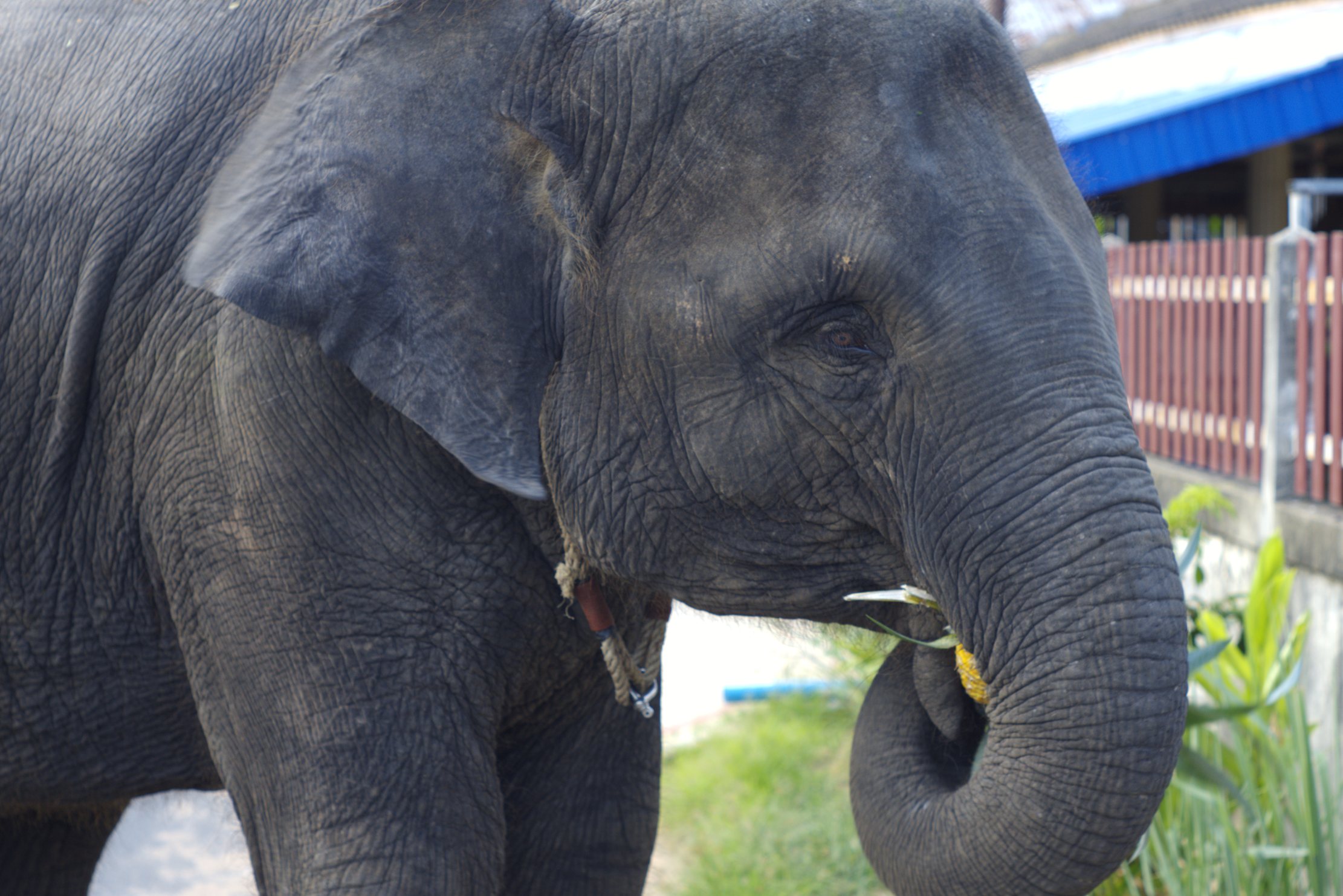
The elephant moved slowly and confidently. The mahout carried himself with the same quiet energy. There was no visible struggle for control. No tugging. No commands barked across the road.
Instead there were soft sounds, subtle vocalizations, and barely perceptible gestures.
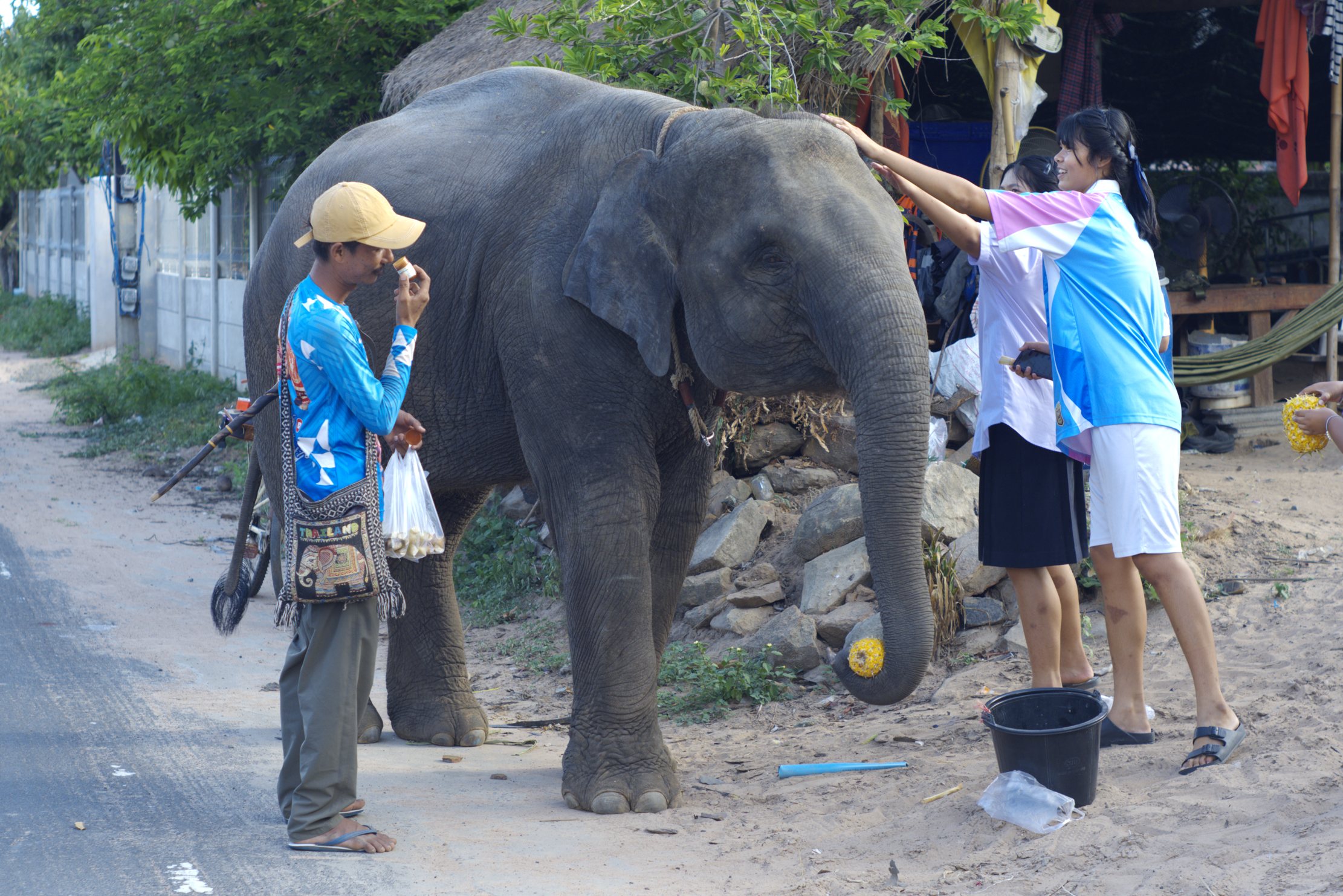
The two seemed to be carrying on a conversation invisible to everyone else.
At one stop, neighborhood dogs approached cautiously, unsure what to make of the enormous visitor. Children emerged from houses to pet and feed it. One young girl became momentarily overwhelmed by the attention, let out a shriek, abandoned her sandals, and sprinted down the road.
The elephant never reacted.
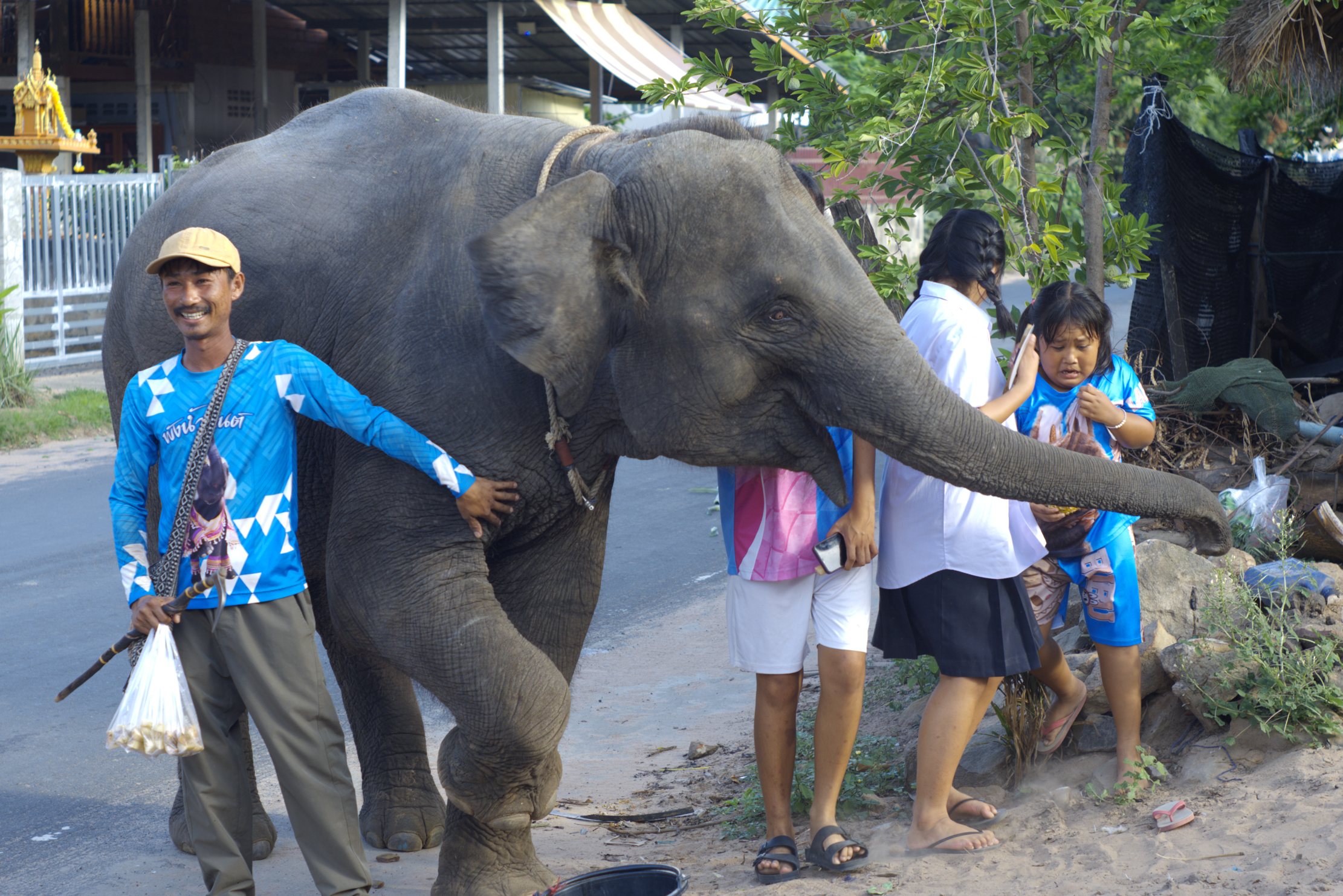
It simply stood there, patient and unmoved by the commotion swirling around it.
There is something strangely calming about being near an elephant.
For an animal of such immense size, they possess a remarkable grace. Their movements are deliberate. Their demeanor feels thoughtful. Standing beside one, it is easy to understand why so many cultures have attached spiritual significance to them.
As much as I enjoy these encounters, I don't imagine I'll be making a special trip to Elephant Village anytime soon.
There isn't much need.
Every so often, Elephant Village comes to us.
And on those mornings, coffee tends to get cold while the village gathers around the latest visitor wandering down the road.